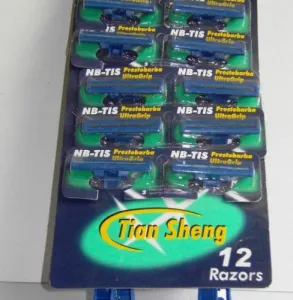


Disposable vs Cartridge Razor: Key Differences for B2B Buyers
Importers often receive two quotations for what looks like the same product and find a cost gap of 30 percent with no obvious cause. In most cases the difference is not price negotiation at all. One quote is for a disposable razor and the other is for a cartridge razor, and the two sit in different cost structures, different retail channels and different replacement logic. Mixing them up in a purchase plan leads to inventory that either sits too long or runs out mid-season.
Ningbo Jiangbei Tiansheng Plastic Products Factory has produced injection molded shaving products since 1996, and most buyer confusion we see starts at the terminology stage rather than the specification stage. This guide separates the two formats on the points that actually change a purchase decision: construction, blade count, cost per shave, replacement cycle and channel fit.
1. What Each Term Means in the Trade
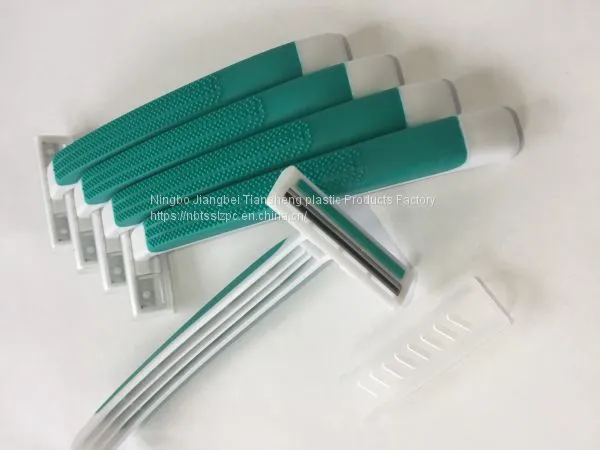
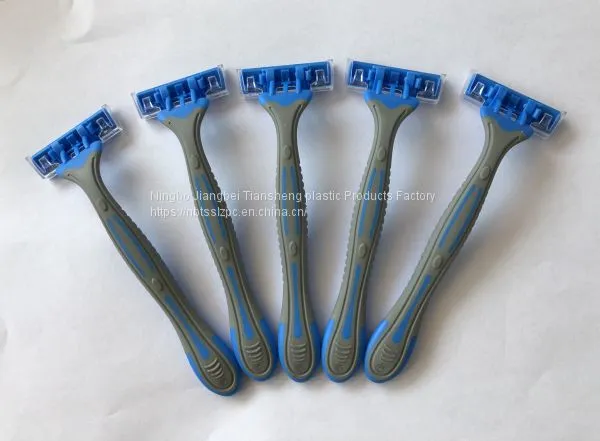
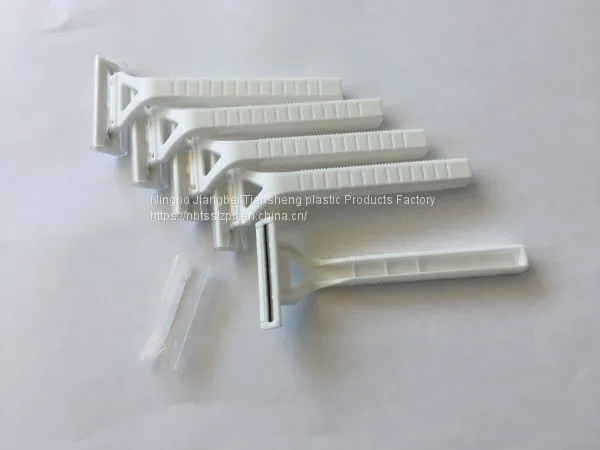
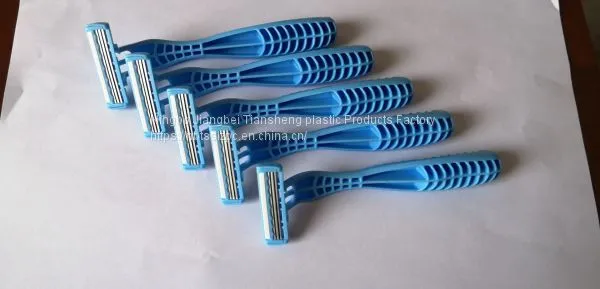
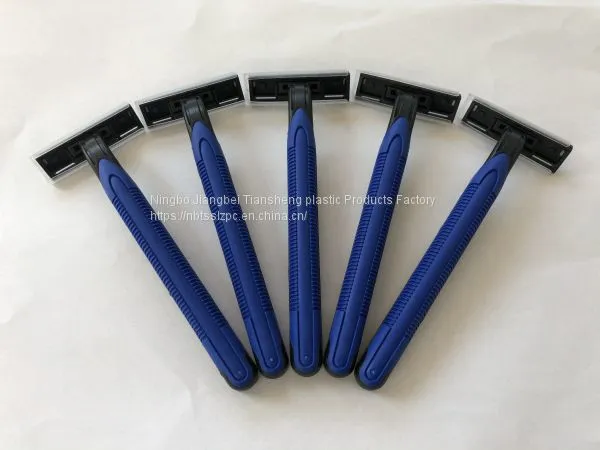
A disposable razor is a complete shaving unit sold as one piece. Handle, head and blade are fixed together at the factory, and the buyer replaces the whole item when the blade dulls. Nothing on the unit is designed to be swapped out by the user.
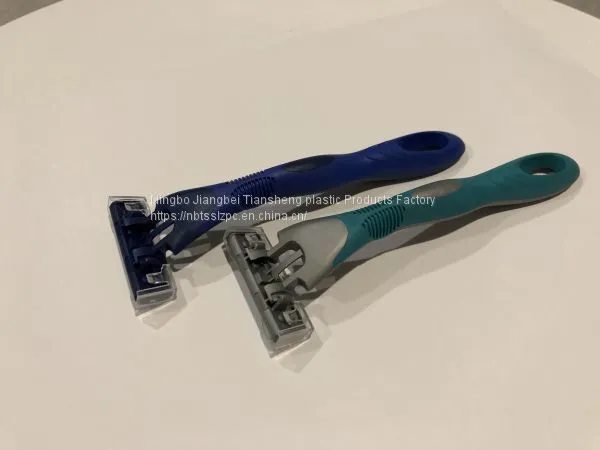
A cartridge razor works the other way around. The handle is a durable item purchased once, and only the head, usually called a cartridge, is replaced. The cartridge clicks onto a connector on the handle, and that connector is proprietary in most cases.
Most sourcing briefs open with a disposable razor vs cartridge razor question long before any specification is settled, and the answer shapes everything that follows.
The distinction matters commercially because it determines what the buyer is actually stocking. With a disposable razor, every unit sold equals one handle plus one blade assembly. With a cartridge razor, one handle may support twenty or more cartridge purchases over its life, which shifts the revenue pattern of the entire product line.
2. Construction: Where the Two Formats Diverge
| Element | Disposable razor | Cartridge razor |
|---|---|---|
| Handle | Molded in one piece with the head, typically PP or PS, 8-14 g | Separate durable part, often ABS or rubber overmold, 20-45 g |
| Head connection | Fixed or single pivot pin molded into the handle | Proprietary clip or rail system, tight tolerance |
| Blade mounting | Blades fixed at the factory, not user serviceable | Blades fixed in a cartridge, cartridge replaced by user |
| Lubricating strip | Optional, often omitted on economy models | Common on mid and premium tiers |
| Tooling cost | Low to moderate, one family of molds | High, handle mold plus cartridge mold plus connector |
| Assembly steps | Few, suitable for high volume lines | More, with a precision joining step |
The tooling difference drives most of the commercial behaviour that follows. A disposable razor family can be launched for a fraction of the mold investment a cartridge system requires, which is why private label programs in the entry and mid tiers usually start with disposables.
The disposable razor vs cartridge razor split also explains why private label programs in the entry tier almost always begin with the simpler format.
Tiansheng Plastic Products Factory runs in house injection molding for handles and heads, so a change in handle material or grip texture stays inside one production flow rather than moving between suppliers.
3. Blade Count and Head Geometry
Disposable razors are commonly offered in single, twin, triple and four blade configurations. Twin blade remains the volume leader in hospitality and promotional channels because it balances shave quality against unit cost. Four and five blade disposables exist but sit in a narrower band, mostly where a retail brand wants to signal a premium tier without moving to a cartridge system.
Cartridge razors cluster at three blades and above. The reason is structural rather than technical: a cartridge carries a higher unit value, so the added blade cost is easier to absorb, and the replaceable head gives the brand a reason to justify a premium position.
Head geometry matters more than blade count for perceived comfort. Blade exposure, the amount of blade edge protruding past the guard, typically sits in a narrow band, and small deviations change the feel noticeably. A fixed head on a disposable razor is set once at the factory, while a pivot head on a cartridge razor introduces a spring or flex element that must hold its angle across thousands of cycles.
4. Cartridge Razor Cost Per Shave: Building the Model
Cost per shave is the number that separates the two formats in a buyer's spreadsheet, and it is usually calculated too simply. A cartridge razor cost per shave figure that omits handle amortisation understates the format by a wide margin.
The correct model divides The correct model divides the total cost of ownership over the number of shaves delivered, not the number of units purchased.
| Line item | Disposable razor | Cartridge razor |
|---|---|---|
| Handle cost | Bundled into unit price | Paid once, amortised over many shaves |
| Blade cost | Bundled into unit price | Paid per cartridge |
| Typical shaves per unit | 3 to 6 | 8 to 14 per cartridge |
| Freight per shave | Higher, more plastic and packaging per shave | Lower after the first purchase |
| Break-even point | Immediate, no commitment | Reached after roughly 6 to 10 cartridge changes |
Buyers who set a cartridge razor cost per shave next to a disposable unit price are comparing two different quantities. A twin blade disposable razor that delivers five shaves carries its full landed cost inside those five uses. A cartridge system spreads the handle cost across a much longer period, so cartridge razor cost per shave drops as usage continues. The crossover usually lands somewhere between the sixth and tenth cartridge, after which the cartridge system is cheaper per shave on materials alone.
That arithmetic ignores two costs buyers should not ignore. First, cartridge systems carry a higher initial inventory commitment because the buyer must stock handles and cartridges as separate SKUs. Second, a proprietary connector locks the buyer into one cartridge source, which changes negotiating leverage over time.
5. Disposable Razor Replacement Cycle and Reorder Logic
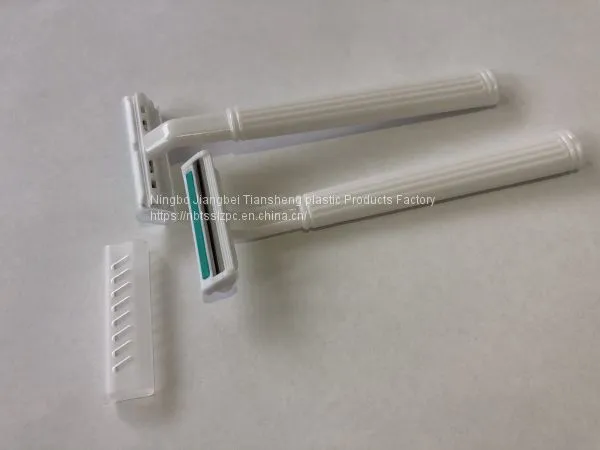
The disposable razor replacement cycle is short by design, and that short cycle is an advantage for channels that cannot manage returns or refills. A hotel guest uses the razor once or twice and discards it. A hospital patient uses it for the length of a stay. In both cases a replaceable head would add cost and handling without adding value.
For distributors, the short cycle translates into predictable reorder rhythm, and that predictability is the main operational argument for the format in institutional supply.
Because the disposable razor replacement cycle is measured in days rather than months, a distributor can set reorder points from headcount data alone. If a customer base consumes a fixed number of units per month, the reorder interval is stable and forecasting is straightforward. Cartridge systems behave differently because cartridge consumption per handle is not fixed, and a shift in that ratio can leave a distributor holding the wrong mix.
- Disposable: reorder volume tracks end-user headcount closely
- Cartridge: reorder volume tracks installed handle base, with a lag
- Disposable: less exposure to connector changes by the brand owner
- Cartridge: exposure to design changes that strand existing handle stock
6. Channel Fit: Retail, Hospitality and Institutional
Disposable razors dominate hospitality and institutional supply because the purchase decision is made by a procurement team, not a consumer. Housekeeping needs a unit that can be placed in a room, used, and discarded without a support process. A missing cartridge is a guest complaint, while a complete disposable unit is self-contained.
Cartridge razors dominate consumer retail in markets where shoppers buy shaving as a category rather than a consumable add-on. The brand owns the connector, the shelf presence is built around replacement cartridges, and the handle is often sold at a low entry point to seed the installed base.
For a buyer weighing disposable razor vs cartridge razor options for this channel, the deciding factor is usually handling cost rather than unit price.
Not long ago, a distributor in Eastern Europe placed a mixed order for a hotel group and a retail chain from the same brief. The hotel portion was specified as twin blade disposable razors in individual sachets, and the retail portion as a three blade cartridge system with a rubber handle. Splitting the brief this way removed roughly 18 percent of the packaging cost on the hotel side, because the retail carton and blister format was never needed.
The same arithmetic explains why a cartridge razor cost per shave advantage only appears once the installed handle base is large enough to absorb the first purchase.
A smaller case involved a sourcing agent in South America who had been buying cartridge systems for a promotional campaign. The campaign ran for six weeks and required no refills. Switching to a four blade disposable razor cut the unit cost by roughly 26 percent and eliminated a cartridge SKU from the warehouse entirely.
7. Packaging and Private Label Implications
A disposable razor replacement cycle of a few days means packaging has to survive only one transport leg and one short storage period, which allows lighter film.
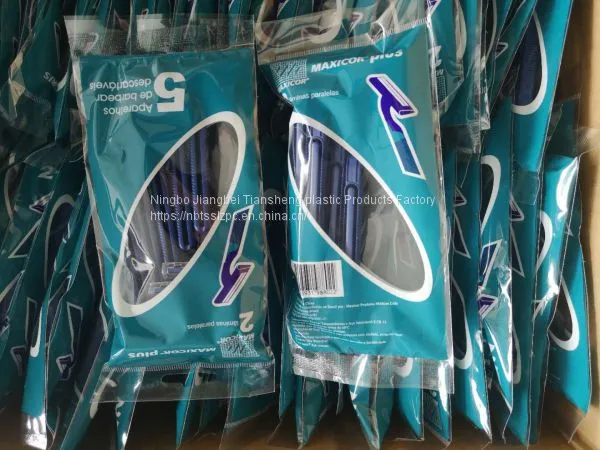
Packaging follows the format. A disposable razor is usually packed in a printed poly bag, a sachet or a blister card, and the unit is complete, so the packaging only has to present and protect. A cartridge system requires packaging that separates the handle from the cartridges or presents them together without confusing the shopper about what is included.
For private label, the disposable route is the faster path. Artwork changes are limited to the bag or card, and a brand can test a market with a modest order before committing to a full range. Ningbo Tiansheng handles logo printing on handles and printed film for sachets within the same order flow, which keeps a private label launch in one production sequence.
Cartridge private label requires more upfront work: the connector must match the brand's chosen handle, the cartridge mold must be cut, and the packaging must explain the refill relationship clearly. Budget four to eight additional weeks before first production compared with a disposable program.
8. Where the Disposable Razor vs Cartridge Razor Comparison Breaks Down
The disposable razor vs cartridge razor comparison is often framed as a straight cost contest, and that framing fails in three situations. The first is high-frequency professional use, where a durable handle with frequent cartridge changes genuinely reduces waste and cost.
A cartridge razor cost per shave model built around a retail programme rarely transfers to an institutional account, because the usage assumptions do not carry over.
The second is regulated institutional supply, where single-use items may be preferred or restricted depending on the facility. The third is markets with strong refill culture, where shoppers expect to buy heads rather than whole units, and a disposable-only range underperforms regardless of unit price.
A fourth factor is often overlooked: storage. Disposable razors occupy more warehouse volume per shave delivered because the handle ships with every unit. In markets where warehouse cost is high relative to labour cost, that volume penalty can offset the lower unit price.
9. Specification Checklist Before You Place an Order
The disposable razor vs cartridge razor choice should be settled before step one, because several later points change with the format.
The checklist itself is format neutral. The same eight points decide whether the delivered goods match the sample. Write them into the purchase order rather than leaving them to the artwork file.
- Blade count and blade material grade, stated explicitly
- Handle material and target weight in grams, with tolerance
- Head type, fixed or pivoting, and pivot range if applicable
- Lubricating strip present or absent, and its composition
- Packaging format, film thickness and print method
- Units per inner box, inner boxes per carton, carton dimensions
- Inspection level and acceptable quality limit for the shipment
- Pre-production sample approval before the production run starts
Ningbo Jiangbei Tiansheng Plastic Products confirms each of these on a signed sample before mass production, and holds the approved sample as the reference for the incoming inspection of each subsequent order.
10. Frequently Asked Questions
10.1 Is a disposable razor cheaper than a cartridge razor for a hotel program
In a hotel, the disposable razor replacement cycle is measured per guest rather than per week, which is why the format fits the channel. For a hotel program, a disposable razor is almost always the lower total cost option, because the guest uses it once or twice and the property has no process for collecting or replacing cartridges. The disposable razor carries its full cost in one unit, typically a fraction of the cost of a handle plus cartridge, and it removes a handling step for housekeeping. The only case where cartridges win is a long-stay property where guests stay for weeks and expect a refillable product.
10.2 How many shaves should a twin blade disposable razor deliver
Anyone planning a disposable razor replacement cycle for a tender should state the test method alongside the expected count. A twin blade disposable razor typically delivers three to six comfortable shaves, depending on beard density and whether the blade is rinsed and dried between uses. Blades left wet dull faster because the edge corrodes at the micro level. Buyers specifying a minimum shave count should state the test method, because shave count measured on a machine rig differs from shave count reported by users in a home-use panel.
10.3 Can one factory produce both disposable and cartridge razors
Yes, and many do, but the production flows are separate. A disposable razor line needs handle and head molds that combine into one part, while a cartridge line needs a durable handle mold plus a separate cartridge mold and a connector with tight tolerance. Buyers running both formats should expect separate tooling charges, separate sample rounds and separate inspection criteria rather than one combined quotation.
Recently Posted
-
Anatomy of a Disposable Razor: Handle, Head and Blade Explained
November 25, 2026A disposable razor contains between four and nine separate parts, depending on how the blade stack is counted, and each one has a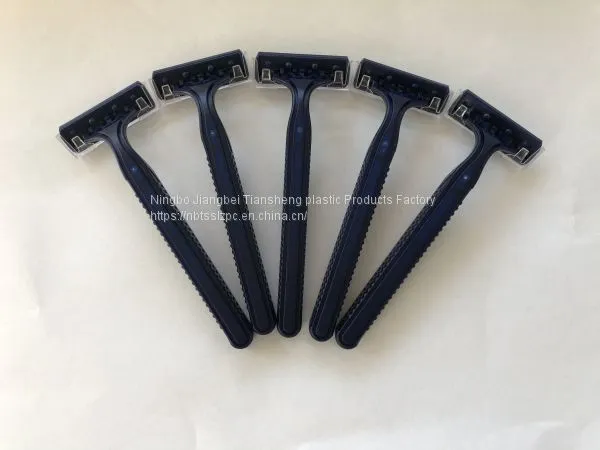 Read More
-
Quality Control in Disposable Razor Manufacturing
September 4, 2026A private-label buyer once accepted a large production run based on a favorable sample and a competitive quotation. The first cont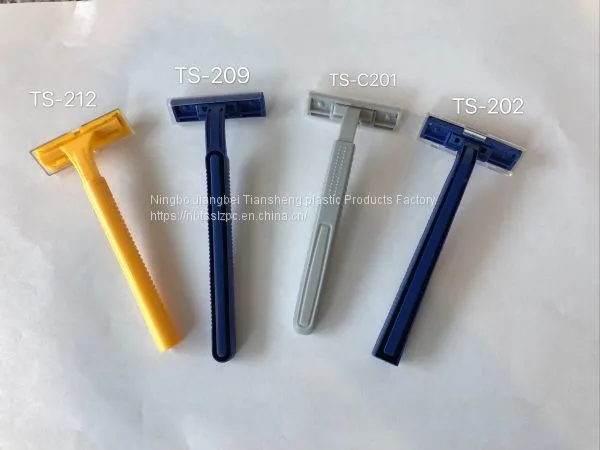 Read More
-
Travel-Size Disposable Razors for Airlines and Travel Retail
September 4, 2026A regional airline once sourced its onboard grooming kits from three different suppliers to keep costs low. Each kit included a co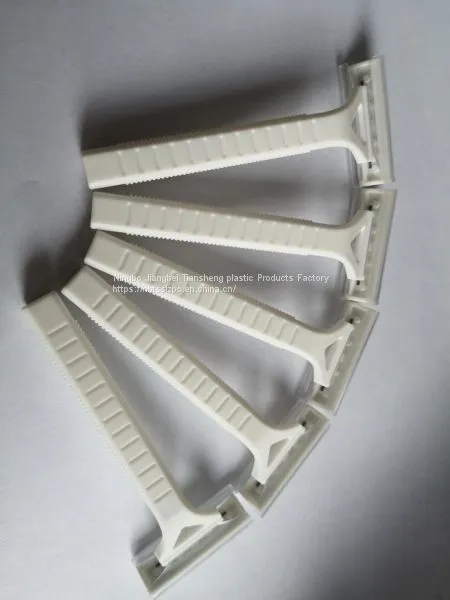 Read More
-
Blade Sharpness Standards and Testing Methods for Disposable Razors
September 3, 2026A distributor in Africa once switched suppliers to save a fraction of a cent per razor. The new factory's blades looked identi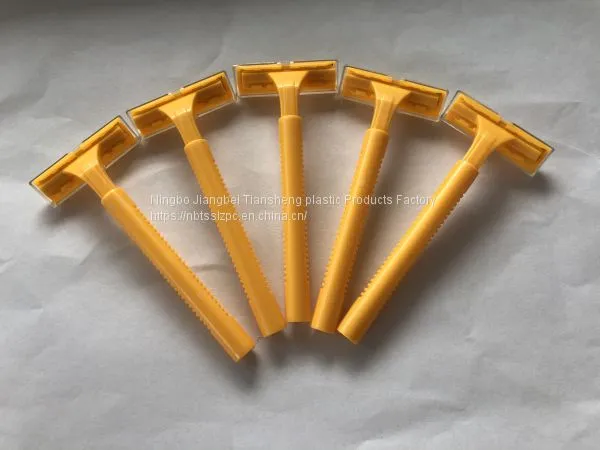 Read More

Contact Us
Recommended Products
-
 TS-C229-A Disposable Razor Male FemaleNegotiableMOQ: 10000 Pieces
-
TS-C228 Disposable RazorNegotiableMOQ: 10000 Pieces
-
TS-C239 Disposable RazorNegotiableMOQ: 10000 Pieces
-
TS-C205 Disposable Razor With Two BladeNegotiableMOQ: 10000 Pieces
-
TS-C229A Disposable Razor ShaverNegotiableMOQ: 10000 Pieces
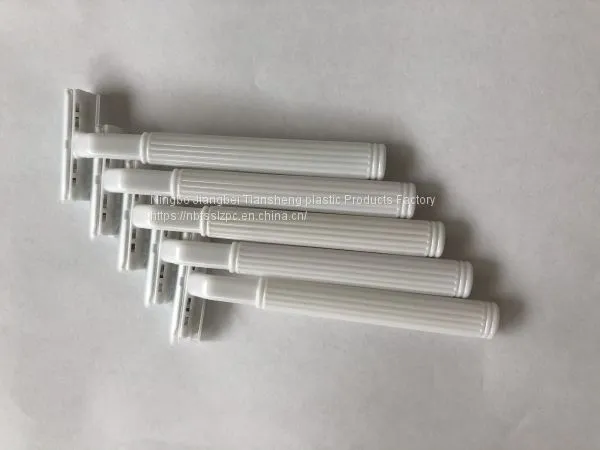
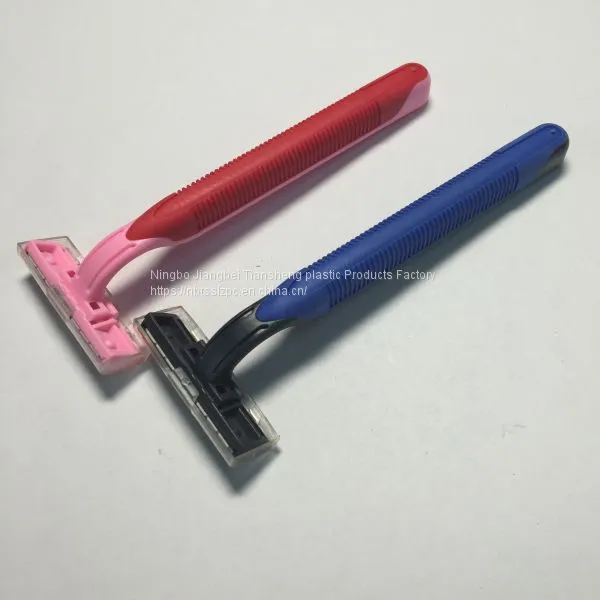
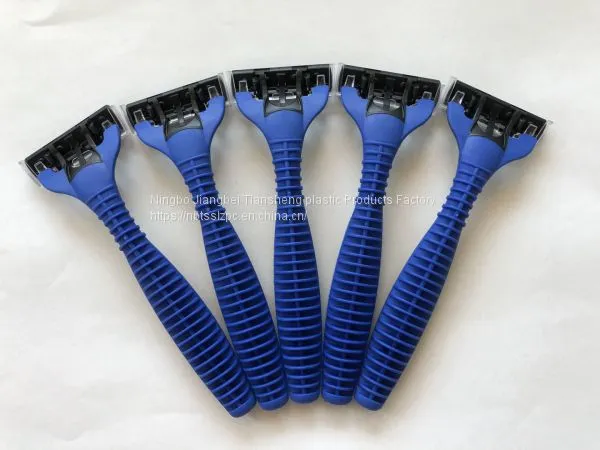
-
Disposable RazorNegotiableMOQ: 100 Pieces
-
TS-C216 Disposable Razor Personal CareNegotiableMOQ: 10000 Pieces
-
TS-C228 Disposable Razor ShaverNegotiableMOQ: 10000 Pieces
-
TS-212 Disposable Razor With Two BladeNegotiableMOQ: 10000 Pieces
-
TS-C229-A Eco-Friendly Disposable Shaving Razor Male FemaleNegotiableMOQ: 10000 Pieces
-
TS-C232 Disposable Hotel Shaving RazorNegotiableMOQ: 10000 Pieces
-
TS-C236 Eco-friendly Straw 2 Blade Shavers Wholesale Hotel Disposable RazorNegotiableMOQ: 10000 Pieces
-
TS-C209A Disposable Razor Shaver Four BladeNegotiableMOQ: 10000 Pieces
-
5-pc Disposable Razor ShaverNegotiableMOQ: 10000 Pieces
-
TS-C219 Eco Friendly Safety Wheat Straw Lady Men Hotel Travel Shaver Disposable RazorNegotiableMOQ: 10000 Pieces